A credit-repair product, built and marketed solo
Product, funnel, content engine and the SEO fix that unburied it. One person, start to finish.
- Role
- Product, design, build, marketing
- Year
- 2026
- Type
- Own product
- Live at
- creditshield.app
- 11
- Letter generators
- 34
- Indexed pages
- 1
- People on the build
Covering the common dispute types
Counted from the live sitemap
Product, funnel and content
The problem
Credit repair is sold either as an expensive monthly service that does work the customer could do themselves, or as a stack of PDFs with no instructions. The gap in between is software that prepares the letters properly, tracks the deadlines the law actually gives you, and then gets out of the way.
The harder problem was distribution. A product nobody can find does not exist, and this one had a technical fault that was actively hiding it from search.
The approach
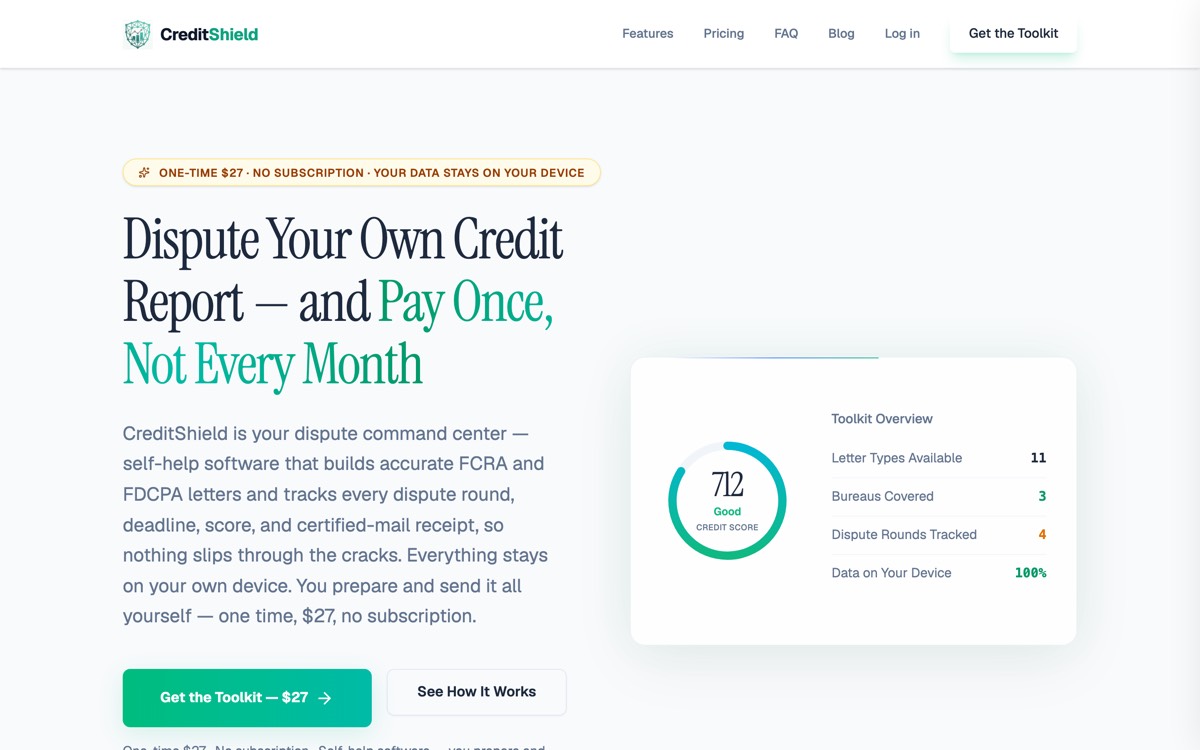
The product side is eleven dispute-letter generators covering the common failure modes, with round tracking, deadline reminders and certified-mail receipts held per dispute, so a user always knows which round they are on and what is owed to them next.
The marketing side is a content layer built to be found, feeding a checkout that does not require a subscription. Both halves were built by the same person, which meant every SEO decision could be made against the actual codebase rather than filed as a ticket.
Decisions
One payment, not a monthly retainer
The entire industry is priced monthly because monthly revenue is better for the seller. It is worse for the customer, who is paying rent on work that finishes. Pricing it once made the product harder to model financially and much easier to argue for.
Finding the canonical fault
The site was publishing content that would not rank. The cause was a canonical tag pointing the wrong way, telling search engines that the pages worth indexing were duplicates of something else. It is the kind of fault that produces no error, no warning and no visible symptom other than silence. Finding it needed someone reading the rendered HTML rather than the dashboard.
The data stays on the user's device
Credit disputes involve exactly the data you least want sitting in someone else's database. Keeping the working data local removes an entire category of breach risk and makes a promise the marketing can stand behind.
What shipped
Visit creditshield.app- Eleven letter generators covering the common dispute types
- Round, deadline and certified-mail tracking
- Stripe checkout, live
- Content and SEO layer, with the canonical fault corrected